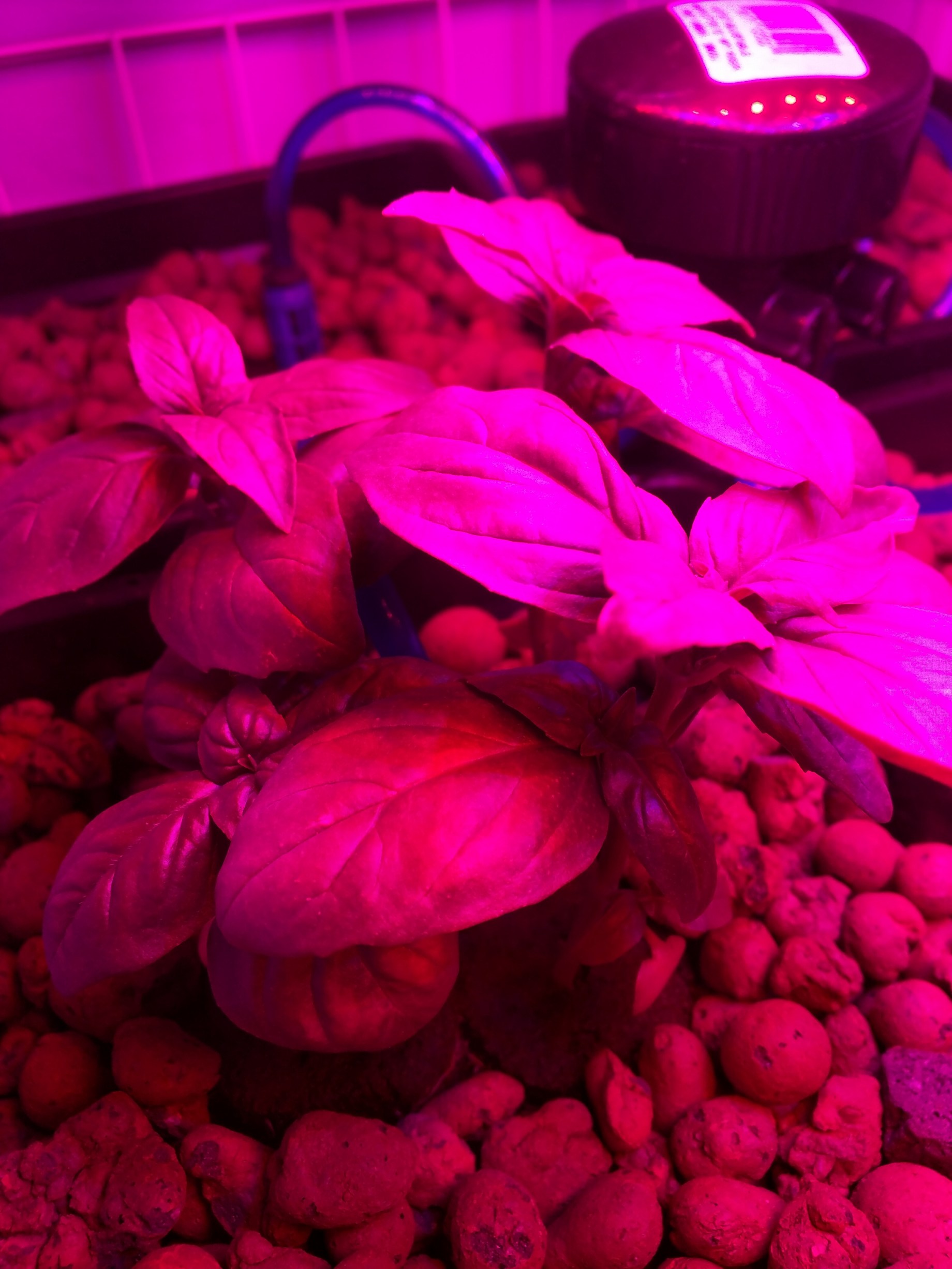
 This is the final installment of phase 1 of the aquaponics system, and this post will make a whole lot more sense once you read my earlier posts. This one will detail the final steps I took to complete my functioning hydroponic system – tending to my plants until they grew beyond the seedling phase; transferring them to their new homes in pots filled with hydroton; and continuously adjusting the height of the light, temperature, pH, and ppm as the plants grew.

In order to get started, I waited until all of my plants had developed just beyond the seedling phase or were at least getting close. The way I determined that the plants had reached this point was by looking at their leaves. These herbs sprouted with leaves that did not resemble what you find in the supermarket. They were smaller and less textured. So once they had leaves that looked like what I am used to or at least started to grow them, I transferred plants, which happened about 3.5 weeks after I planted them. At this point, my plants looked like as they are in the photo below.
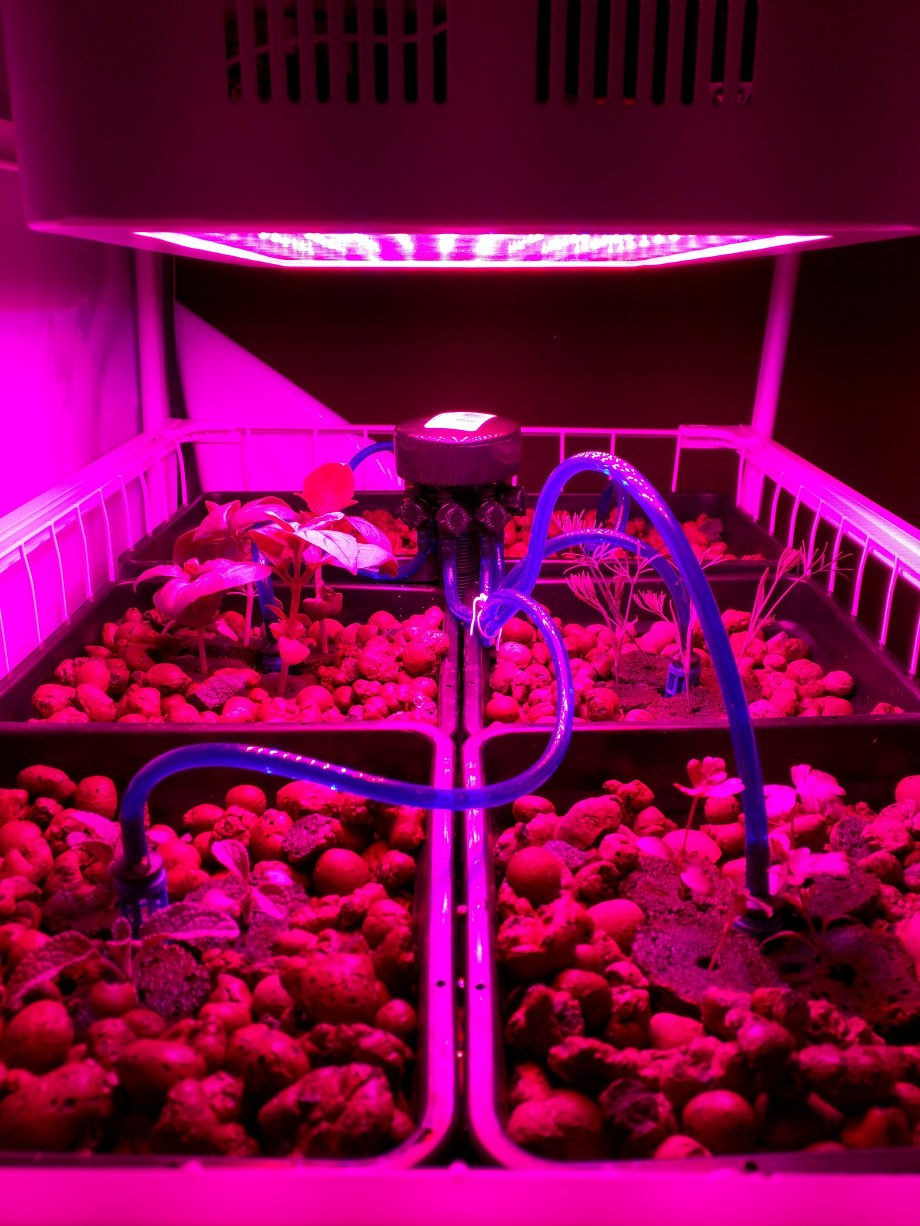
3 sage plants; 4 parsley, 4 basil, 4 dill, 2 cilantro, and 1 rosemary plant germinated and survived to maturity. What’s difficult to see is how relatively immature the cilantro plants and the rosemary are in the back. They took forever. This is why the basil plants are so mature. I had to wait for everyone to catch up. Here are a couple of close ups of each.
Sage:

Parsley:
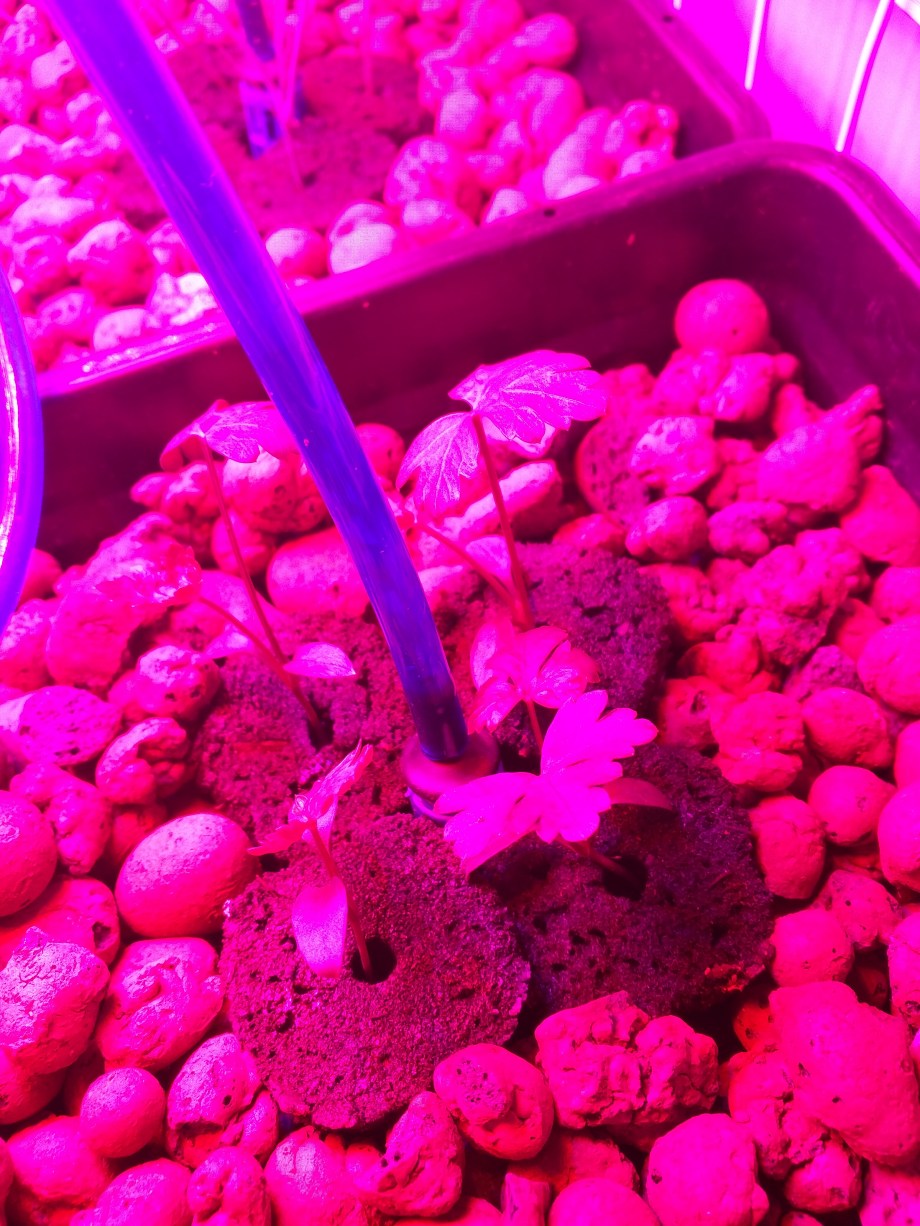
Basil:

Dill:
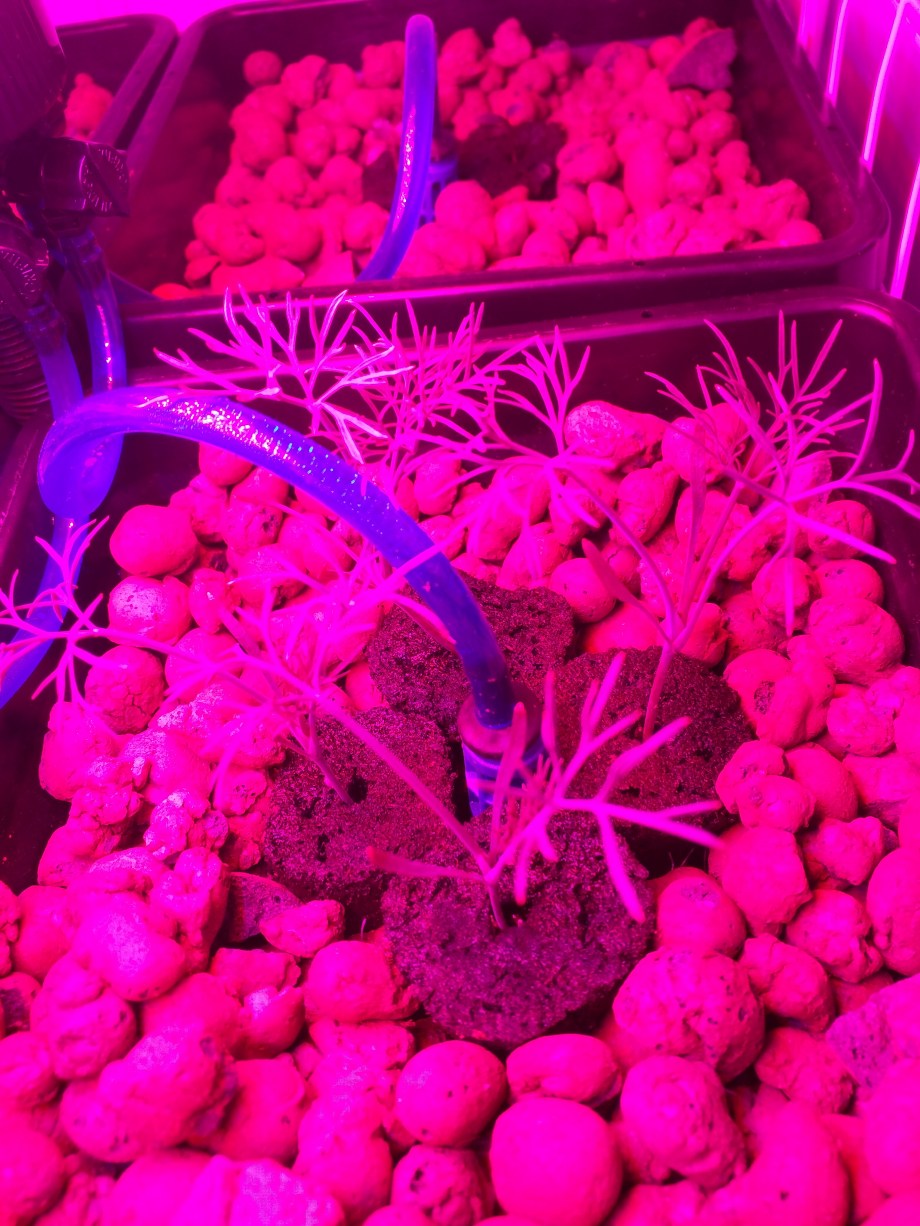
Cilantro:

Rosemary:
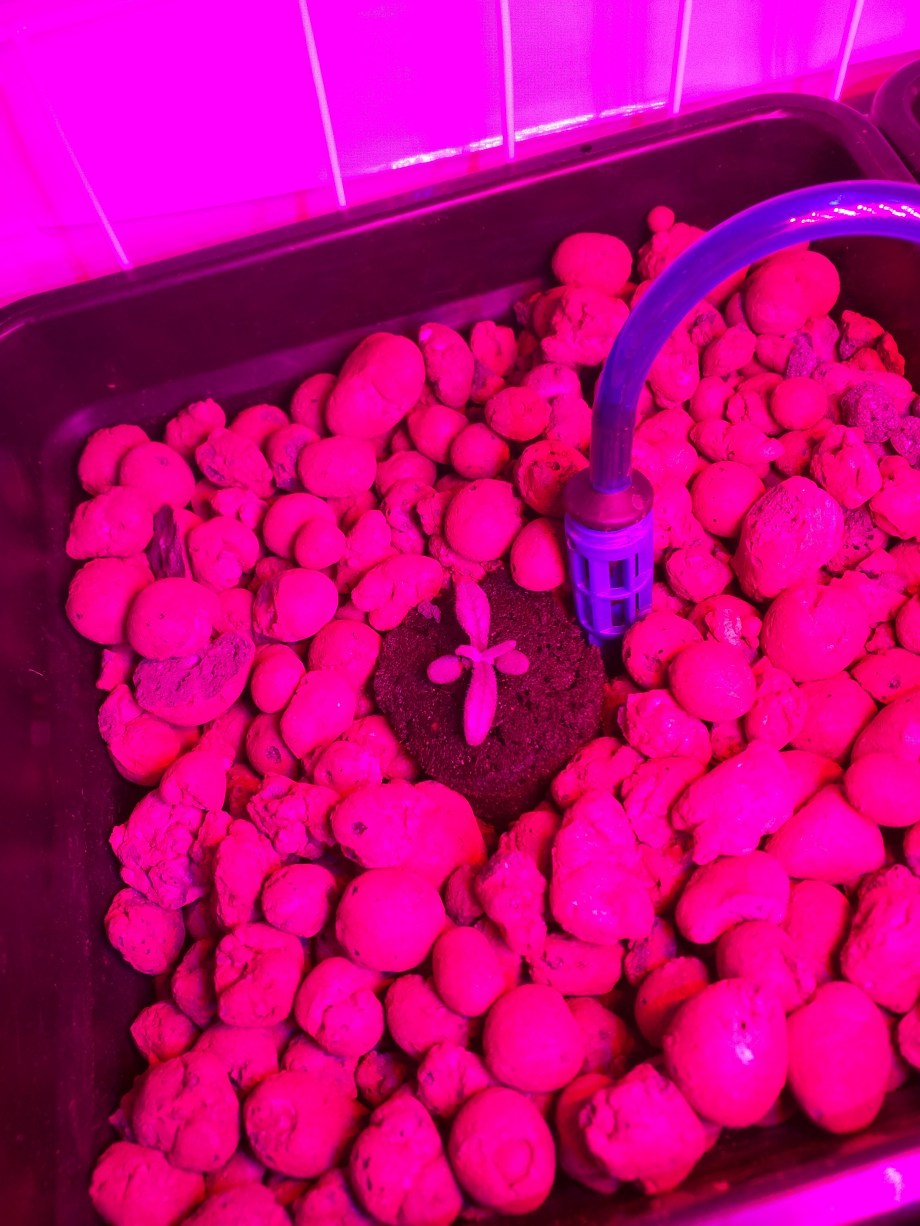
Some plants take longer than others to mature. Go figure. Some plants under the conditions I created germinated with varying success rates. Lesson learned. You’ll notice too that the plants are still in the Rapid Rooter pods. This is because the plants’ roots have pretty much saturated the pods at this point. You can notice that because they’re planted above the hydroton. This is because planting above the hydroton level will minimize algae growth on the pods since algae loves stagnant, warm water.

The plants will start to grow much faster now that they’re no longer confined to the germination tray. This photo was taken 4 days after I transferred them into the pots. In order to maximize their growth, I needed to monitor the height of the light, temperature, pH, and ppm. The light needs to be as close to the plants as it can, so I used to pulleys to adjust the light as the basil grew.
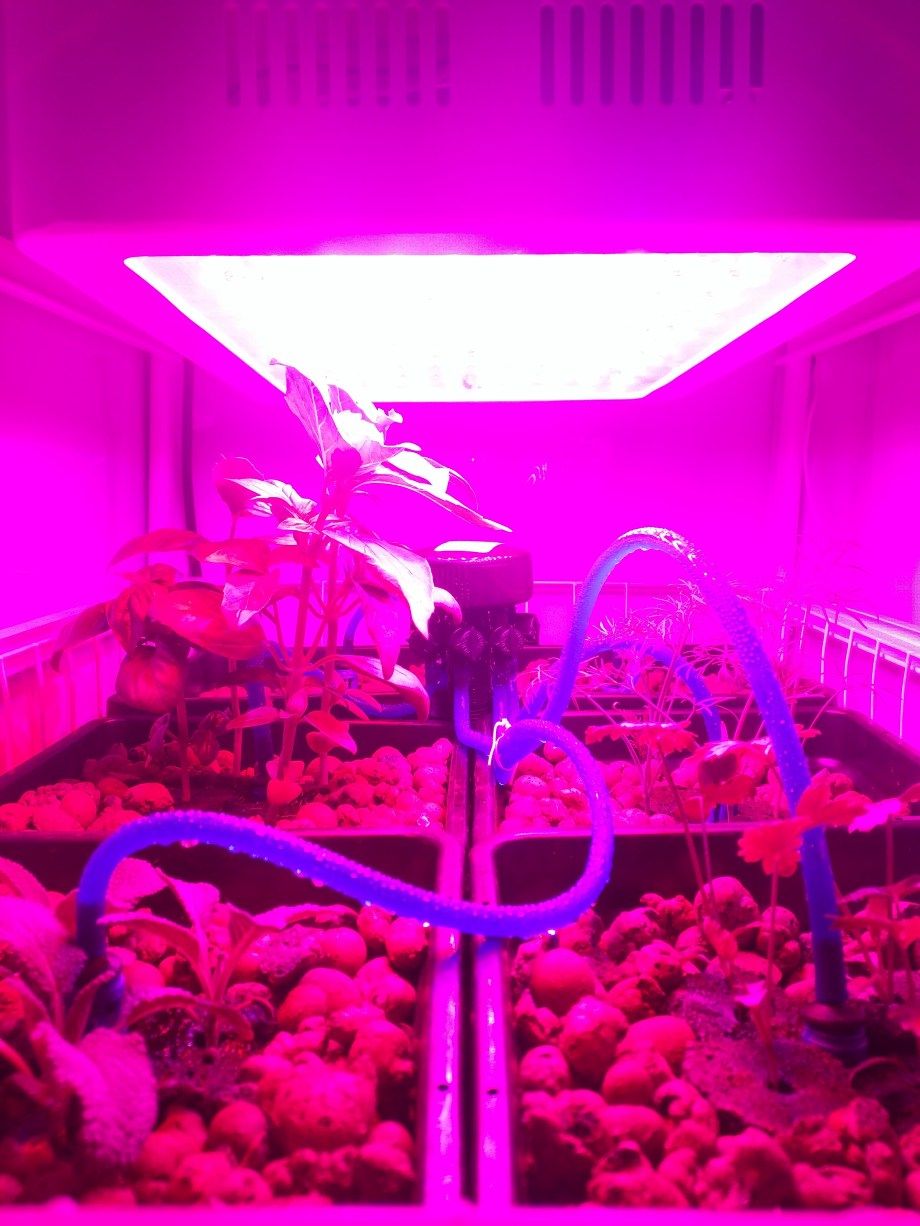
A day later, I needed to adjust the light again. The basil is taking off. As for the temperature, I made some adjustments now that the plants are beyond the seedling phase. In their infancy, 70 degrees is about optimal temperature for these plants. However, now that they’re adults, the temperature can rise to about 90 degrees. The hotter it is; the more photosynthesis takes place; the more water and nutrients they get; and finally the more they grow, especially at night. The pH is kept at the same level, around 6.0; however, with much more water in the reservoir below (about 10 gallons), balancing the pH takes a lot more pH UP/DOWN. On the upside, it takes much less time for them to take effect, now that we have a pump that circulates 250 gallons per hour. Lastly, ppm. Like with explaining the bell siphon, I will defer to another online resource that I found helpful, Right to Thrive’s post about balancing water chemistry for aquaponics. I can’t wait to see how the herbs taste.

Since the basil is doing so well, I’ll start with them. Here is a Thai recipe that my friend shared with me, Magic Basil.
 Christian C. Montalvo